- Brief
- Book Updates
- Author
- Bhai-Dhawa Sesay
- Reading time
- 8 minutes
- Published
- Updated
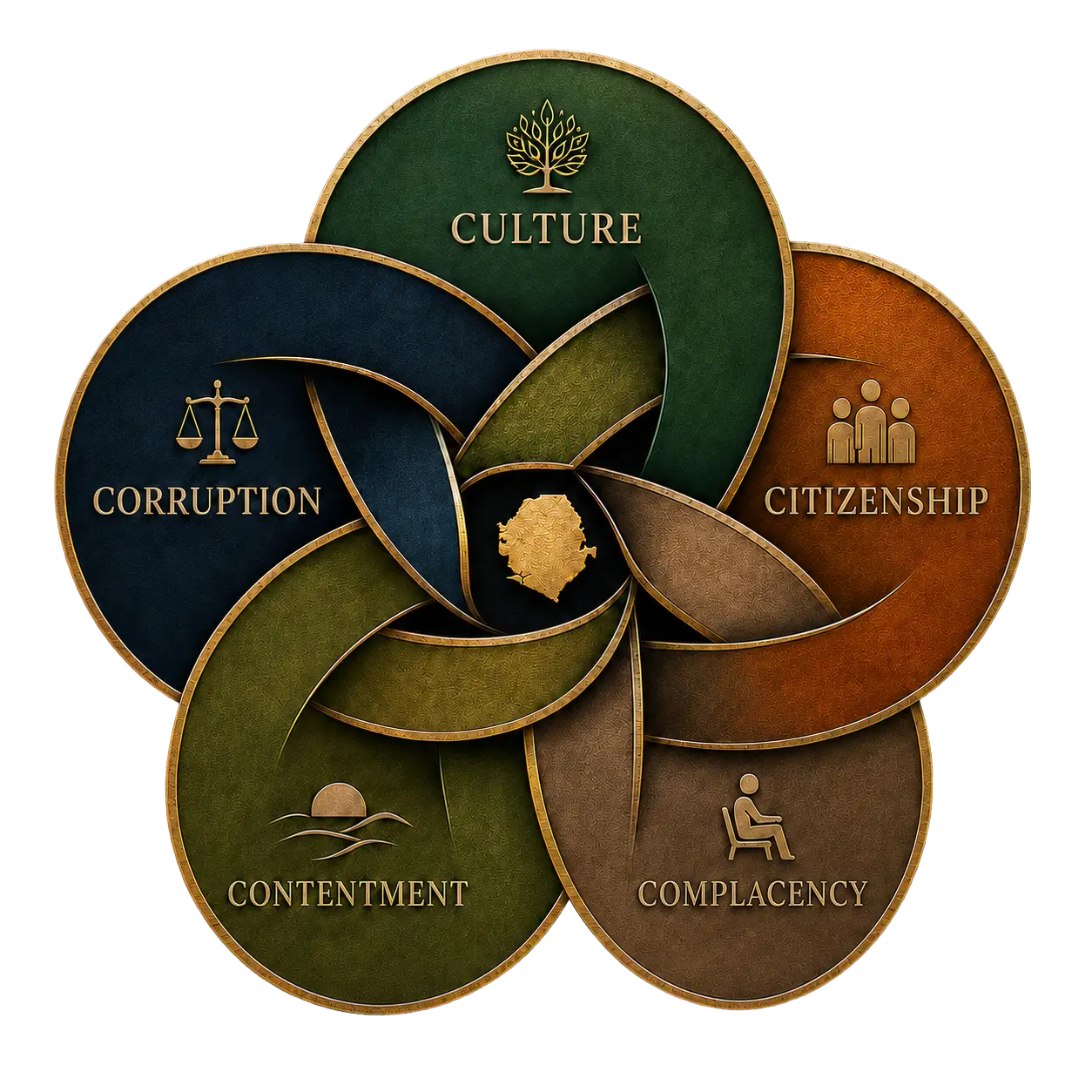
Elections matter, but citizenship cannot end when the rallies are over. The quieter work of asking questions, following public decisions, and seeking explanations is part of how citizens remain present in the life of a democracy.
When the campaign ends, citizenship remains
Political parties organize. Candidates travel. Citizens attend rallies, debate promises, display party colours, defend records, criticize opponents, and prepare to vote. For a brief period, public life can feel intensely political. People are reminded, in a direct and visible way, that political authority depends upon popular participation.
Then the election ends.
The posters fade. Campaign vehicles disappear from the daily scene. Political conversation may become less urgent. Citizens return their attention to work, school, business, family responsibility, faith communities, and the demanding daily effort of managing life.
Government, meanwhile, begins the work of governing.
This is precisely when citizenship must continue.
Voting is among the most important acts available to a citizen in a democracy. It is a declaration that public authority should answer to the people. But voting is not the complete meaning of citizenship. It is the beginning of a public responsibility that continues long after ballots have been counted and campaign language has become quieter.
The question is not whether every citizen must become a full-time activist, policy specialist, or public commentator. Most people cannot do that, and no healthy civic culture should demand that everyone carry the same burden in the same way. The question is whether citizens remain present enough to notice, remember, ask, and care.
Most of public life happens in the quieter seasons
Between elections, decisions can be made that shape the conditions of ordinary life. Budgets may be prepared. Contracts may be awarded. Appointments may be made. Policies may be revised. Projects may begin, slow down, stall, or disappear from public attention. Institutions and public agencies may make choices whose effects are felt in schools, hospitals, communities, roads, markets, workplaces, and households.
These quieter decisions are often less dramatic than a campaign rally. They may not arrive with party music, flags, speeches, or crowds. Yet they can matter deeply to the parent waiting for a service, the student seeking opportunity, the trader trying to keep a business open, the worker depending on a reliable system, the family concerned about public safety, and the community hoping to see a long-promised improvement.
For Sierra Leoneans at home and across the diaspora, this question of attention has a particular human weight. Many people carry concern for communities they live in, communities they support from abroad, and relatives whose daily experiences make public decisions more than an abstract political subject. Distance does not remove civic concern. Neither does a busy life cancel the importance of public responsibility.
Citizenship between elections is therefore not about living in permanent political conflict. It is about refusing to treat public life as important only when parties are competing for votes.
Weak supervision begins when memory becomes short
A citizen who becomes politically active only during an election period may leave those in authority with a long period of weak public supervision. That is not because every public official acts without conscience, nor because every decision is wrong. It is because power is healthiest when it expects to be observed, questioned, and required to explain itself.
Public accountability is not the same as hostility. Asking a question is not automatically an accusation. Requesting an explanation is not the same as assuming guilt. Remembering a promise is not an act of disrespect. These are ordinary habits of citizenship.
There is a difference between partisan loyalty and civic responsibility. Partisan loyalty may ask whether a decision helps or harms a preferred side. Civic responsibility asks a wider question: does this decision serve the public well, and can those responsible explain it?
That wider question matters whether one supported the party in office, supported an opponent, chose not to vote, or has become disappointed with politics altogether. Citizenship cannot be reduced to celebration when a preferred candidate wins or anger when that candidate loses. A citizen remains a citizen under every administration and after every result.
In this sense, public memory is a civic resource. When people remember what was said, what was promised, what was prioritized, and what was left unresolved, they help create a culture in which public language carries consequences.
Begin with simple questions
Citizens do not always need complicated language to take part in public life. Some of the strongest tools available are simple questions, asked consistently and in good faith.
- What was promised? This question protects public memory. It asks citizens to listen carefully during campaigns and public announcements, rather than allowing every promise to disappear into the next news cycle.
- What was funded? This question moves attention from words to priorities. It asks what resources, if any, have been committed to the work that was presented as important.
- What has been completed? This question makes room for honest recognition of progress while also distinguishing announcements from delivery.
- What has changed? This question returns public discussion to lived reality. It asks whether people can identify a meaningful difference in the condition that was supposed to improve.
- Who is responsible? This question resists the habit of allowing responsibility to become vague. Public work may involve institutions and many individuals, but citizens still have a right to understand where responsibility sits.
- What explanation has been given? This question insists that silence should not become a substitute for accountability. Where progress has been delayed, altered, or abandoned, citizens may reasonably ask for a clear explanation.
These questions are not weapons reserved for moments of scandal. They are the language of ordinary democratic maintenance. They can be asked in respectful conversation, community meetings, civil society spaces, professional associations, local forums, family discussions, and responsible public commentary.
Attention is not the same as outrage
There is a temptation to believe that civic engagement must always be loud. In a political environment shaped by fast reactions, strong loyalties, and constant argument, quiet attention can seem less impressive than outrage. But outrage alone does not necessarily produce understanding, and it does not always sustain the patience required to follow a public issue from promise to outcome.
Citizenship asks for something more demanding than a quick reaction. It asks for disciplined attention.
Disciplined attention means resisting the urge to repeat claims before understanding them. It means separating questions from rumours. It means allowing evidence, explanation, and correction to matter. It means being willing to recognize progress where progress has been made, while still refusing to excuse avoidable failure. It means directing criticism toward decisions and responsibilities rather than turning every disagreement into personal contempt.
This approach is not weak. It is serious. It protects public discussion from becoming merely another contest of insults, and it makes it harder for those in authority to dismiss all questions as partisan noise.
Citizens do not need perfect information before they ask for clarity. They do, however, need humility about what they know, care in what they repeat, and a commitment to revise their views when better information becomes available.
The democratic work after voting
The end of a campaign should not be the end of public interest. It should be the beginning of a new kind of attention: less theatrical, perhaps, but no less important.
After the flags are folded away and the speeches are no longer daily news, citizens can still ask: What was promised? What was funded? What has been completed? What has changed? Who is responsible? What explanation has been given?
These are simple questions. They are also serious questions. They remind public officials and institutions that authority is not only granted at the ballot box; it is also watched, remembered, and examined in the ordinary life that follows.
Democracy requires elections. It also requires citizens who do not disappear after them.
This is not a call for permanent anger. It is a call for permanent civic presence.
Carry the questions beyond election season
Choose one public issue that affects your community, family, profession, or place of concern. Write down what has been promised, then return to the six questions in the months ahead. Share the reflection with someone who believes citizenship should continue after voting.
Reflect on the six civic questions
Keep reading
Continue with the Blog
Building a Reader Experience for Sierra Leone and the Diaspora
How accessibility, low-data choices, offline reading, and clear publication boundaries shape the Five C reader experience.
Read article