Official Media Center
Accurate Materials for Serious Coverage
Approved book information, author materials, interview preparation, downloadable assets, and a direct route for journalists, reviewers, producers, and event organizers.
Verified publication facts
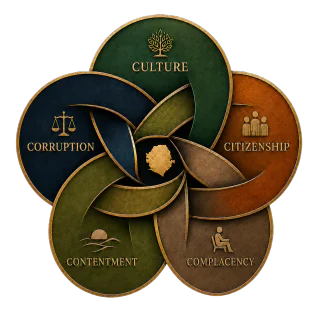
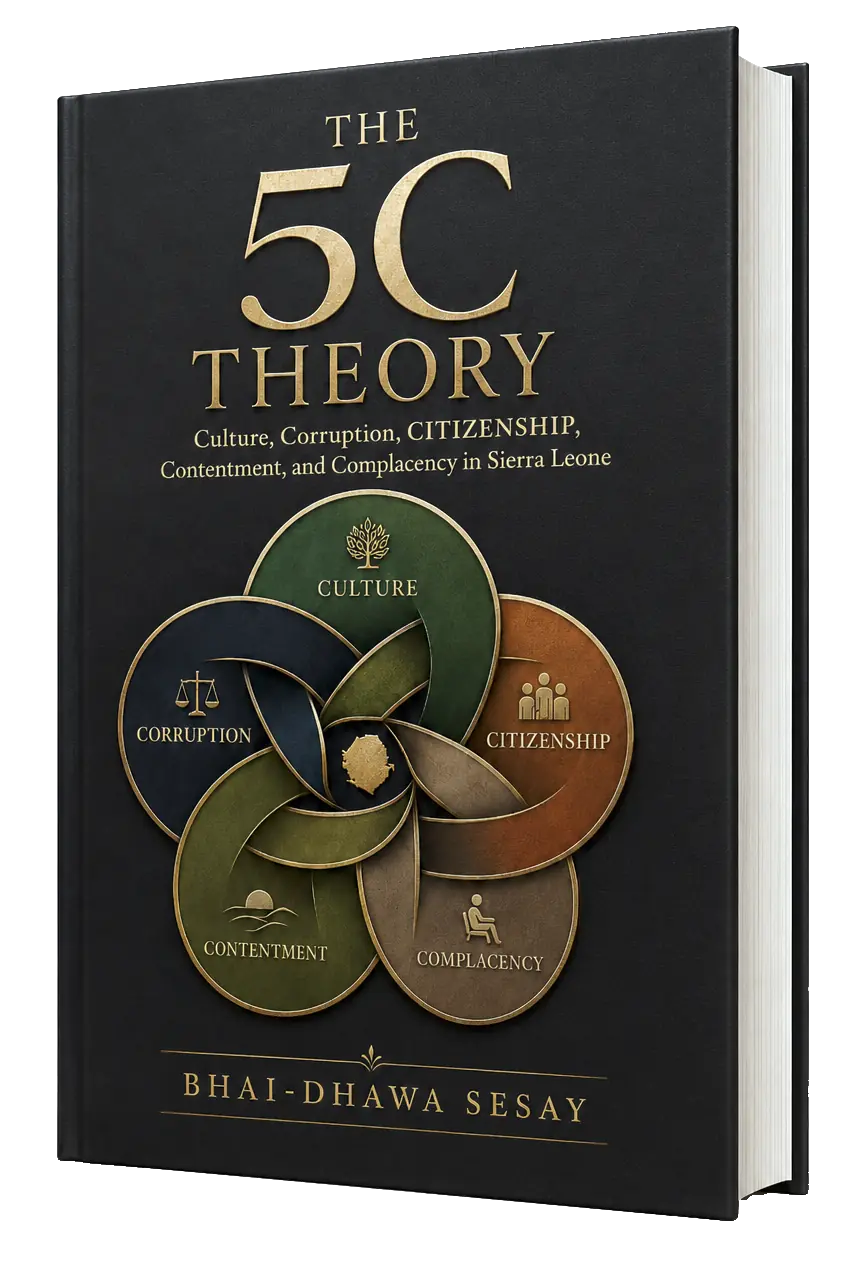
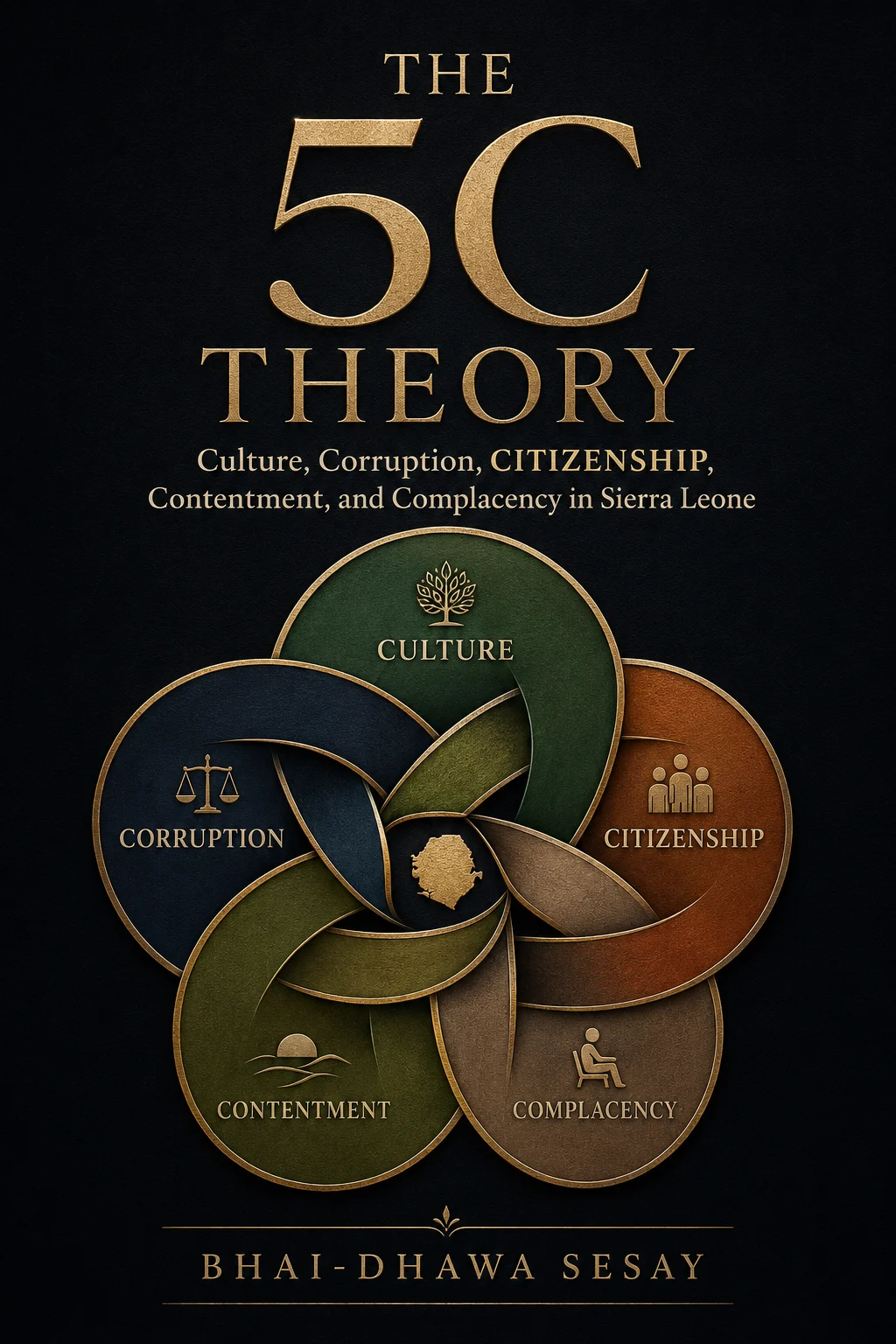
The Five C Theory
Publication information maintained by Leone Connect Publishing.
- Subtitle
- Culture, Corruption, Citizenship, Contentment, and Complacency in Sierra Leone
- Author
- Bhai-Dhawa Sesay
- Publisher and official seller
- Leone Connect Publishing
- Status
- Prepublication production
- Language
- English
- Publication date
- To be announced when confirmed
- Copyright year
- 2026
Ebook
EPUB · English · First edition, 2026
ISBN: 979-8-9982321-5-2
Paperback
Print edition
Hardcover
Hardcover · English · First edition, 2026
ISBN: 979-8-9982321-4-5
Approved descriptions
Copy that can be used accurately.
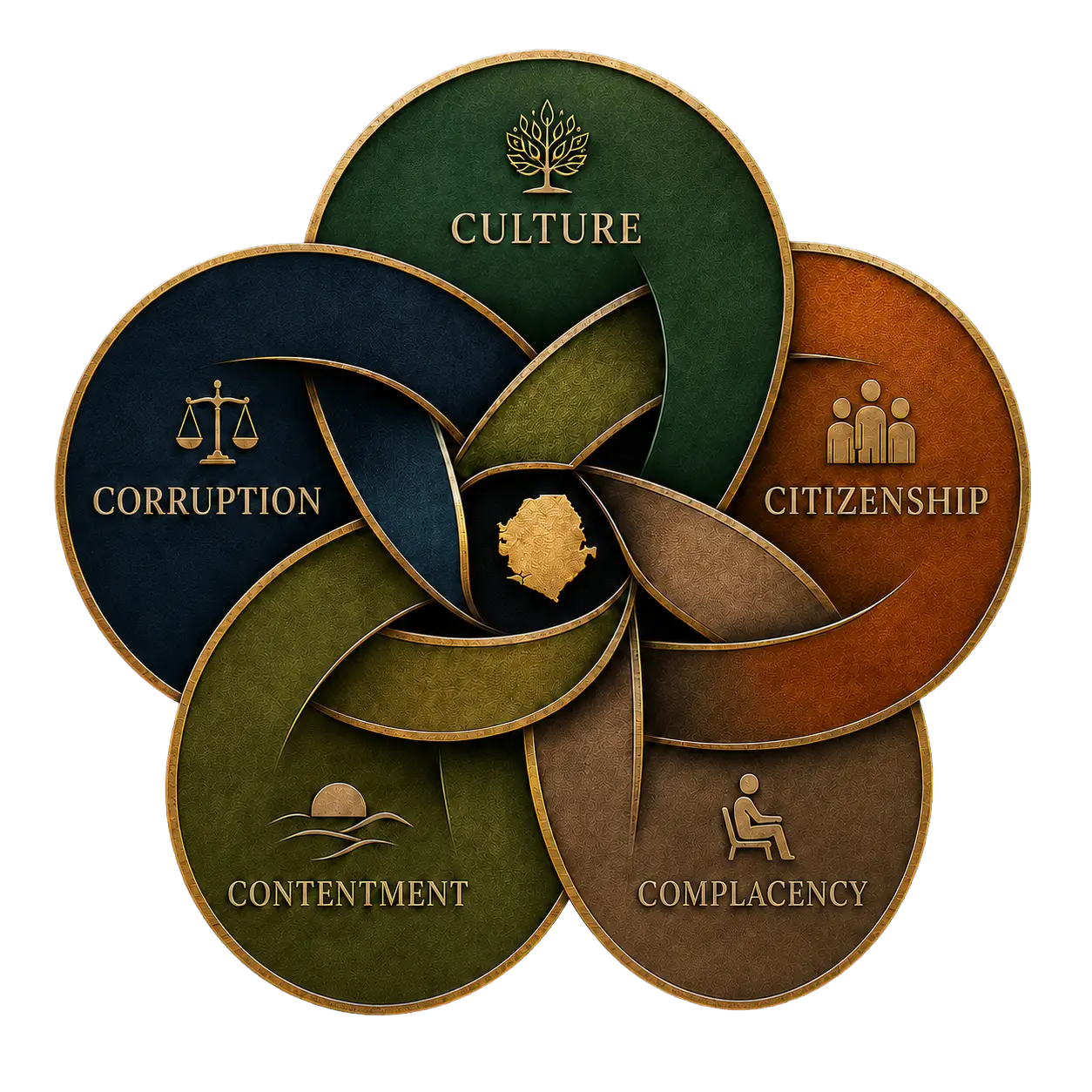
The Five C Theory examines how culture, corruption, citizenship, contentment, and complacency interact in Sierra Leonean public life—and how equal citizenship and accountable institutions can interrupt public failure.
Why does replacing political leadership so often leave the relationships surrounding public power intact? In The Five C Theory, Bhai-Dhawa Sesay examines how social obligation, private access, political identity, adaptation, and public expectation interact in Sierra Leone. Culture, citizenship, and contentment can support resistance to corruption; they are not simply national problems. Across 24 chapters, the book distinguishes loyalty from complicity, survival from consent, and personal contentment from acceptance of public neglect. It moves from diagnosis to practical civic organisation, institutional accountability, and sustained public action. Written as a work of civic interpretation, the framework invites readers to test its claims against evidence and cases that do not fit.
The Five C Theory begins with a public question: why can laws, elections, investigations, and changes of leadership leave familiar relationships of power intact? Bhai-Dhawa Sesay follows the connections among family obligation, respect, political loyalty, corruption, citizenship, contentment, and the standards institutions are expected to meet.
The five names identify domains of public life, not five equally harmful forces. Culture can widen solidarity. Citizenship can protect the claim of a stranger. Contentment can free a person from the pressure to accumulate without accepting inadequate schools, unsafe roads, or unreliable care. Corruption distorts entrusted authority for improper advantage. Complacency normalises an inadequate public standard.
The book keeps unequal power in view. A parent seeking urgent treatment does not bear the same responsibility as an official who makes treatment depend on an unofficial payment. Silence may reflect danger or exhaustion. A workaround may conceal institutional failure or supply evidence for reform. Participation is not automatically approval, and adaptation is not consent.
Five four-chapter parts examine Culture, Corruption, Citizenship, Contentment, and Complacency. Four concluding chapters turn to inclusive civic organisation, complaint systems that survive a change of leadership, and the practical decisions between identifying a problem and verifying a remedy. A school-roof illustration follows inspection, funding, authorisation, repair, and closure, including what to preserve when a campaign cannot succeed.
Scenes and dialogue are illustrative unless explicitly identified and sourced. Notes distinguish legal provisions, historical findings, survey results, institutional accounts, and conceptual research from the author’s interpretation. The framework is open to counterexamples and does not replace historical, economic, or institutional explanations. A 28-question discussion guide and a call to the reader support careful use in classrooms, reading groups, workplaces, and community conversations.
Approved author biographies
Choose the length appropriate to the coverage.
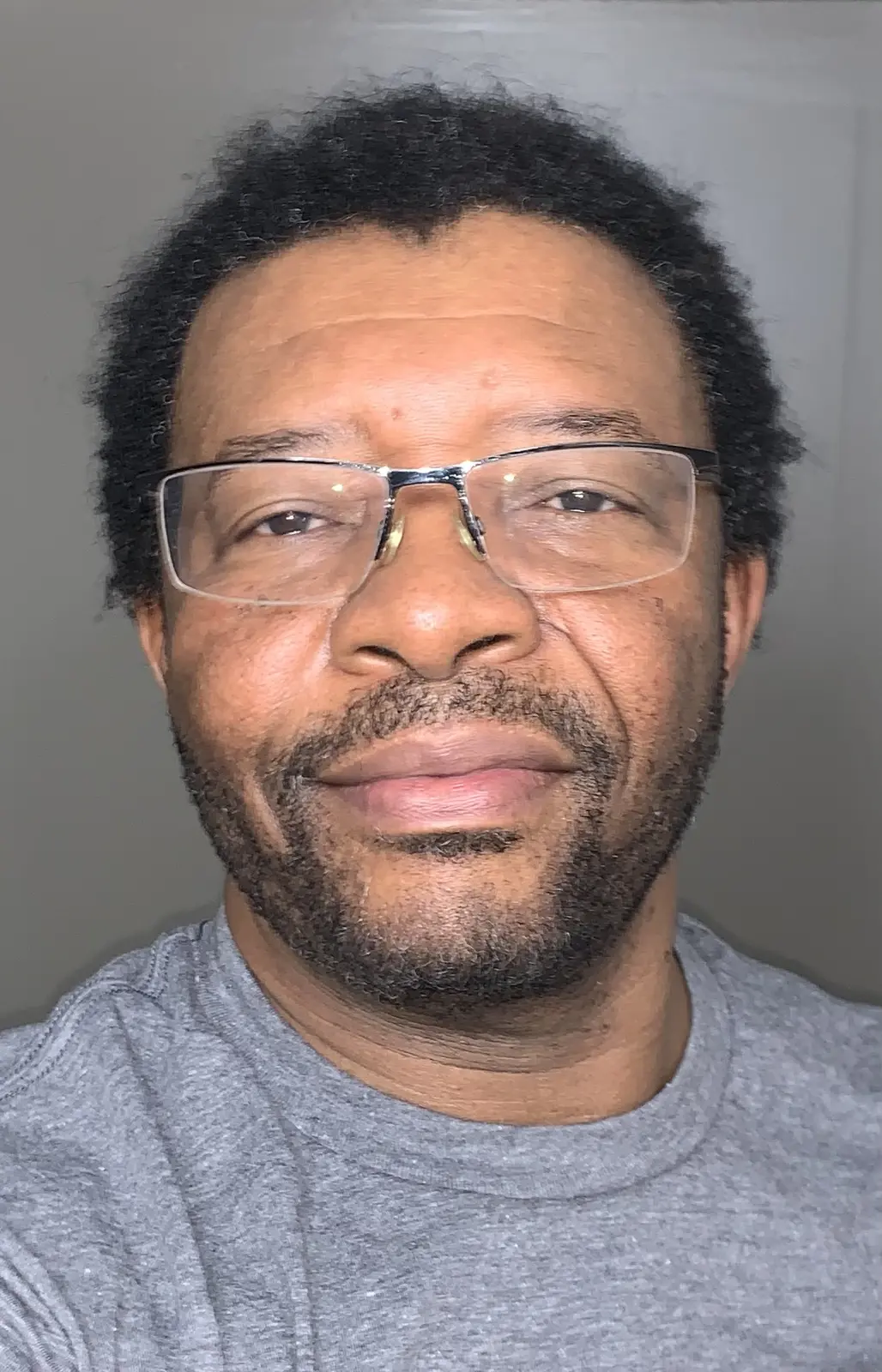
Bhai-Dhawa Sesay is a Sierra Leonean author, technologist, media entrepreneur, cultural producer, and civic thinker. His work connects political engagement, diaspora experience, public communication, and Sierra Leonean institutional life. He is the author of The Five C Theory, published by Leone Connect Publishing.
Bhai-Dhawa Sesay is a Sierra Leonean author, technologist, media entrepreneur, cultural producer, and civic thinker. Born and raised in Sierra Leone, he attended Magburaka Secondary School for Boys and earned a Bachelor of Science degree in Geology and Chemistry from Fourah Bay College in 1986. He later built a career in software, web development, digital publishing, and online communication in the United States, earning a Master of Distance Education and E-Learning from the University of Maryland Global Campus in 2020.
Sesay founded Sierra Leone Live in 1999 and created and produced Usabi Dance in 2010 in partnership with the Sierra Leone Broadcasting Corporation. His return to live and work in Sierra Leone during 2025–2026 helped bring The Five C Theory to completion. He lives in Bowie, Maryland, with his family.
Bhai-Dhawa Sesay is a Sierra Leonean author, technologist, media entrepreneur, cultural producer, and civic thinker. His work brings together political engagement, diaspora involvement, public communication, and observation of Sierra Leonean institutional life.
Born and raised in Sierra Leone, he attended Magburaka Secondary School for Boys before enrolling at Fourah Bay College, University of Sierra Leone. He studied Geology and Chemistry and earned a Bachelor of Science degree in 1986. Later that year he relocated to the United States. He earned a diploma in computer studies from the Programming and Systems Institute in Silver Spring, Maryland, in 1989 and a Master of Distance Education and E-Learning from the University of Maryland Global Campus in 2020.
He is the chief executive officer of Leone Connect and chief technology officer of Leone Host. Leone Connect Publishing operates as a division of Leone Connect. He founded Sierra Leone Live in 1999, helping circulate news during the civil war and its aftermath and connect Sierra Leoneans at home and abroad. His professional work also includes recording, photography, video production, and cultural programming.
In October 2010, he created, owned, and produced Usabi Dance in partnership with the Sierra Leone Broadcasting Corporation, providing a national platform for young dance performers. From October 2025 through June 2026, he lived and worked in Sierra Leone again. During that period he collaborated with the Ministry of Tourism and Cultural Affairs as producer of the inaugural One Nation Reggae Festival, held in November 2025.
The preface to The Five C Theory traces the framework’s development to the early 2000s and its first public naming to a Free Speech WhatsApp group discussion in 2016; Sesay identifies this chronology as his recollection. The book examines how family responsibility, loyalty, faith, communal care, dignity, and resilience can support stronger citizenship and accountable institutions. He lives in Bowie, Maryland, with his family.
Download center
Approved production assets.
Interview topics
Useful directions for a substantive conversation.
- The Five Cs as a relational framework for Sierra Leonean public life
- Belonging, family obligation, and the legitimate claim of the stranger
- Loyalty, complicity, and equal standards for allies and opponents
- Survival inside a corrupt system and unequal responsibility
- Citizen, supporter, client, or subject: changing relationships with power
- Personal contentment and unfinished public obligations
- The hidden money, time, and labour costs of adaptation
- Complacency, justified scepticism, and silence under threat
- From private frustration to safe, organised public action
- Accountability that survives a change of leadership
Suggested questions
Begin with the framework.
- What can the Five C framework explain, and where are its limits?
- How can cultural belonging strengthen equal citizenship?
- When does loyalty become complicity?
- Why does participation under pressure not establish consent?
- How do contentment, resilience, and adaptation differ?
- When does coping conceal public failure, and when can it strengthen reform?
- How can we distinguish complacency from fear, exhaustion, or strategic withdrawal?
- What does the unknown citizen test reveal about a public institution?
- What must happen between identifying a school defect and verifying a completed repair?
- What should citizens preserve when a well-organised campaign fails?
Approved quotations
Verified wording and attribution.
The debt may be real, but the office is not the official’s private means of repayment.
Bhai-Dhawa Sesay, The Five C Theory, Chapter One
A public wrong becomes easier to defend when it borrows the name of a private virtue.
Bhai-Dhawa Sesay, The Five C Theory, Chapter Four
The moral test of reform is whether it ends the exploitation of desperation, not whether desperate citizens become more heroic.
Bhai-Dhawa Sesay, The Five C Theory, Chapter Seven
The connected citizen owes the unknown citizen a system that does not require connection.
Bhai-Dhawa Sesay, The Five C Theory, Chapter Twenty-Four
Coverage and endorsements
No unverified coverage or endorsement is displayed.
Approved appearances, reviews, interviews, quotations, and media coverage will be archived here after publication or broadcast.
Read the review and attribution policyMedia coordination
Make the request specific enough to prepare responsibly.
The Media Kit remains a separate downloadable document. This brief coordinates interviews, review consideration, factual questions, approved assets, and published coverage without inventing endorsements or promising availability.
- 01Describe the outlet and assignment
Identify the program, publication, responsible editor or producer, format, audience, angle, and timing.
- 02Confirm editorial conditions
Clarify live or recorded use, quotation status, recording and editing, deadlines, relationships, and any embargo.
- 03Prepare approved material
Leone Connect Publishing supplies only current approved facts, descriptions, biography, photographs, cover art, emblem, or review material.
- 04Verify the public record
Published coverage enters the archive only after its source, wording, attribution, date, disclosure, and permission basis are checked.
Media and review requests