Flagship explainer · In production
The 5C Theory Explained: Five Forces. One Public System.
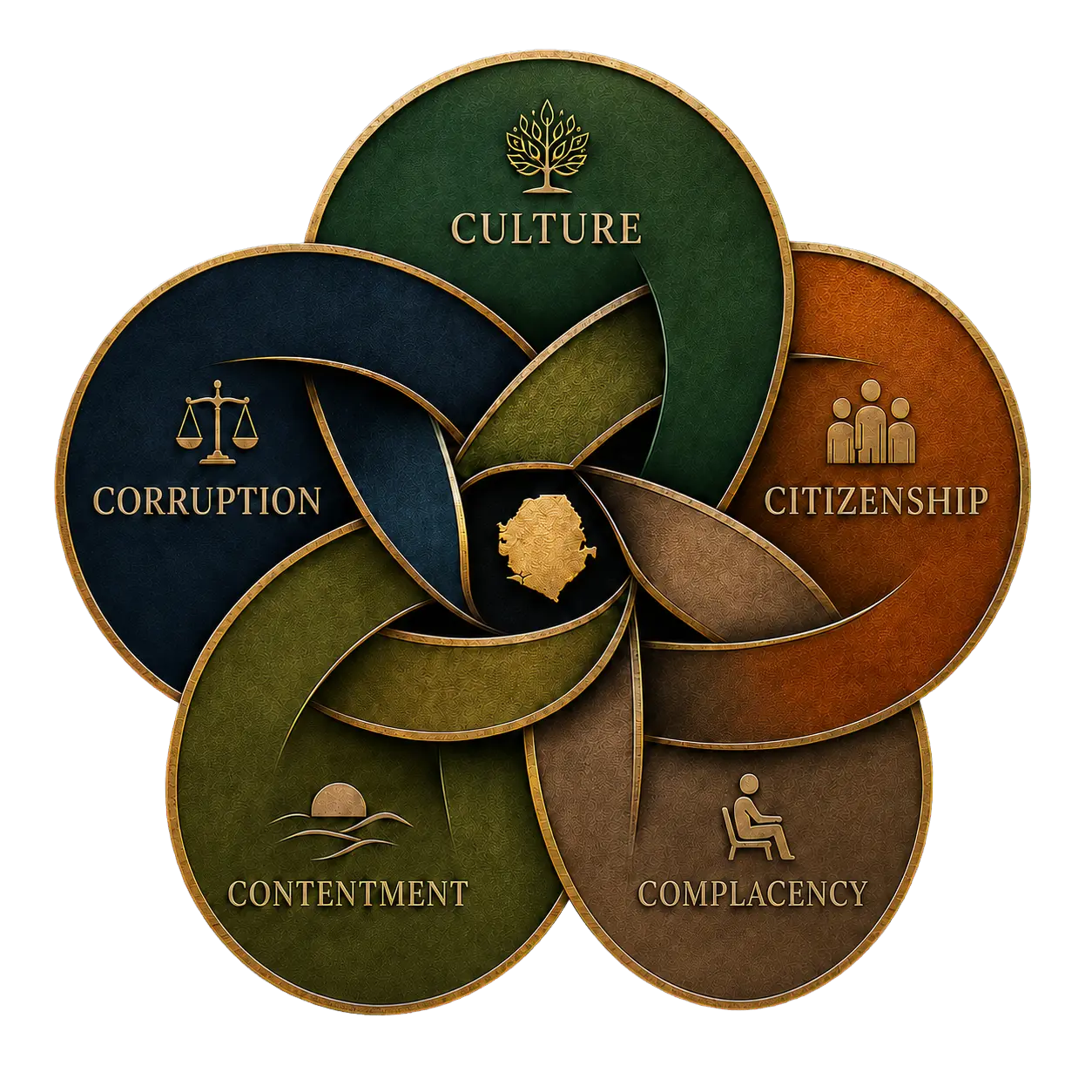
A clear visual introduction to Culture, Corruption, Citizenship, Contentment, and Complacency—and why the five forces must be understood as one connected public system.
Read the explainer now
Five forces. One reinforcing public system.
Video in production. This text-first guide uses the approved framework language now; the finished video, captions, transcript, and sources will replace the production notice only after review.
Culture
Belonging becomes obligation.
Culture gives identity, memory, solidarity, and care. The public danger begins when loyalty to family, party, region, religion, or authority overrides the rule that should protect an unknown citizen.
- Public test
- Can belonging strengthen responsibility without replacing equal rules?
- Interruption
- Widen loyalty into duty toward the whole republic.
Corruption
Obligation becomes private access.
Corruption is not only an exchange of money. It also appears when public authority, procedures, protection, or resources are converted into selective access for connected people.
- Public test
- Would the same procedure work for a person with no connection inside?
- Interruption
- Publish the rule, preserve the record, and apply one standard.
Citizenship
Access replaces equal membership.
Citizenship asks whether people stand before power as equal members of the republic—or mainly as supporters, clients, dependants, and subjects seeking personal protection.
- Public test
- Which rights, duties, and standards apply equally between elections?
- Interruption
- Turn private frustration into a precise public question and shared follow-through.
Contentment
Resilience makes failure survivable.
Faith, patience, gratitude, humor, and adaptation preserve dignity. Yet resilience can also hide the full cost of institutional failure when families quietly purchase what public systems should provide.
- Public test
- Which preventable burdens have citizens been forced to absorb privately?
- Interruption
- Keep dignity while restoring a measurable public expectation.
Complacency
Survival becomes surrendered expectation.
Complacency is often disappointed citizenship that has stopped expecting an answer. Repeated failure becomes normal when complaints remain private and promises are not revisited.
- Public test
- What unacceptable condition has been renamed normal?
- Interruption
- Document the pattern, identify responsibility, return on the recorded date, and decide the next step.
The reinforcing cycle
Each force makes the next one easier to protect.
The sequence is analytical, not inevitable. It identifies where citizens, leaders, families, professionals, media, communities, and institutions can interrupt the pattern.
- 01Widen belonging into public duty
- 02Replace private access with fair procedure
- 03Practice equal public membership
- 04Protect dignity while raising expectations
- 05Turn recognition into disciplined follow-through
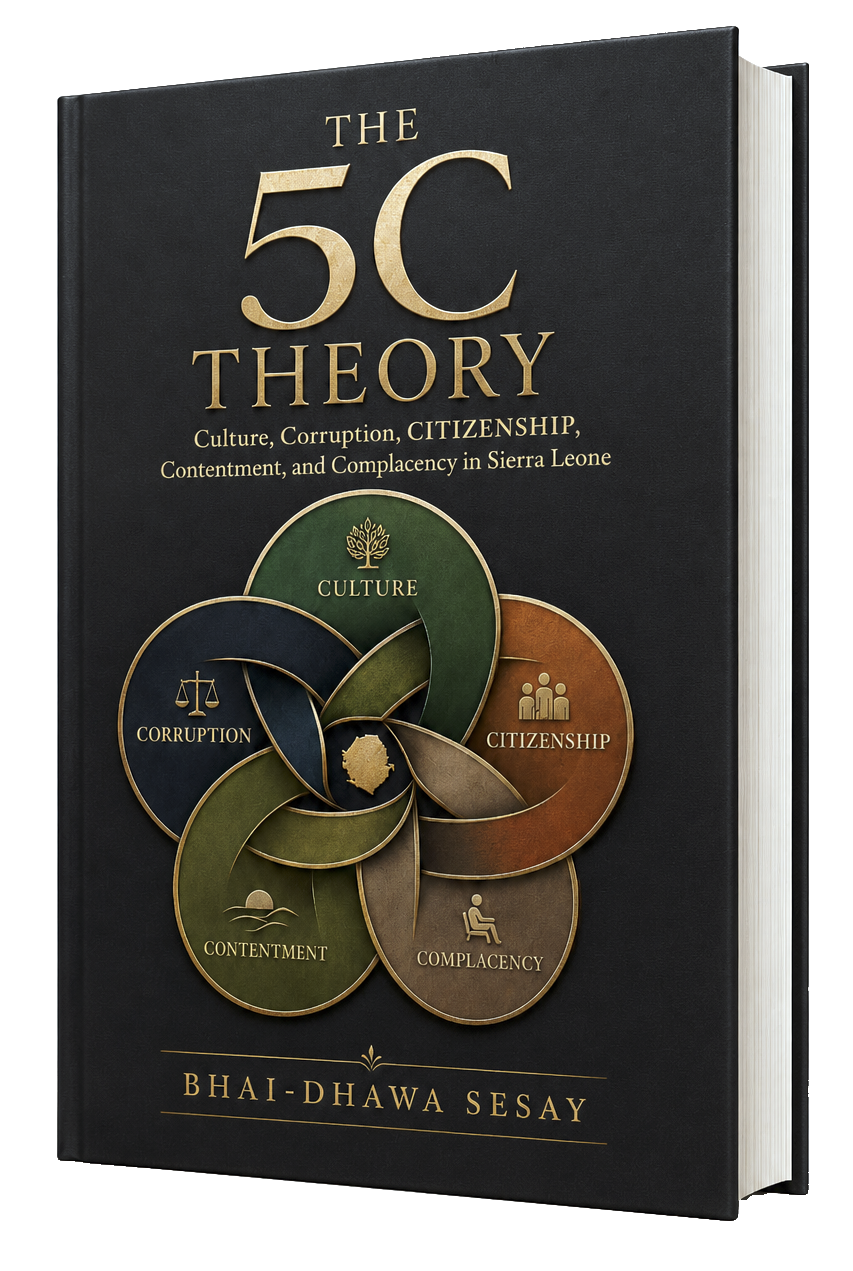 The 5C Theory Explained
The 5C Theory Explained: Five Forces. One Public System.
A clear visual introduction to Culture, Corruption, Citizenship, Contentment, and Complacency—and why the five forces must be understood as one connected public system.
8–12 minutes · Captions, transcript, chapters, and source links plannedVideo overview
Five forces. One connected explanation.
This flagship video introduces the central question, defines each of the Five Cs, explains the reinforcing cycle, and closes with practical points where citizens and institutions can interrupt it.
Companion materials
- Five C Reflection Guide
- Discussion Guide
- Educator Materials
- Free book excerpt
- Related podcast episode
Captions & transcript
Searchable, readable, and classroom-ready.
The human-reviewed transcript will appear with the published video. It will include headings, chapter anchors, meaningful visual descriptions, source links, and a correction route.