- Brief
- Education
- Author
- Bhai-Dhawa Sesay
- Reading time
- 3 minutes
- Published
- Updated
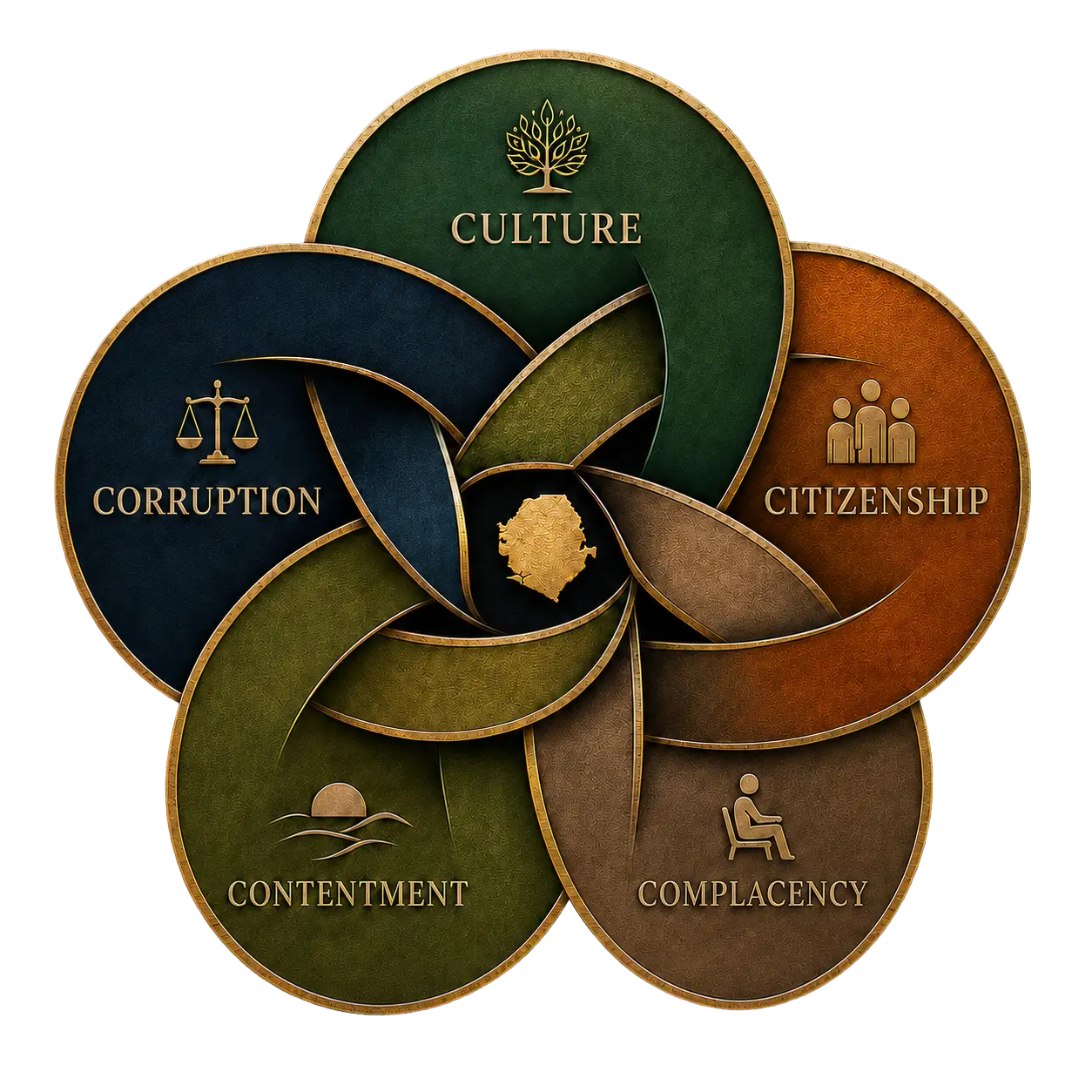
The framework is most useful in a group when it turns a broad national concern into a bounded question, a visible distinction, and a responsible next step.
Begin with a question, not a verdict
A strong discussion does not ask participants to agree that the Five C Theory explains everything. It asks them to select one public situation and examine what the framework helps them notice. Which cultural obligations are present? Where is access equal or selective? What kind of citizenship is being practiced? What expectations have people adapted to? What has become normal through repetition?
The group should also ask what the framework cannot establish without more evidence. This prevents the Five Cs from becoming labels placed on people.
Choose material that matches the group
A first session can begin with the public Five C introductions, the free excerpt, one verified Insight, the Reflection Guide, or the discussion materials. A class may work through definitions and distinctions. A book club may focus on lived experience. An institution may use an accountability or organizational diagnostic tool.
The full book remains in prepublication. No facilitator should imply that participants need to purchase an unavailable edition or have access to the private manuscript.
Create conditions for responsible discussion
Agree on the purpose, time, evidence boundary, privacy expectations, and method for disagreement. Avoid unsupported allegations about identifiable people. Separate personal experience from a claim about an entire community or institution. Give participants a way to decline a question that requires disclosure.
A facilitator should keep returning to the distinction between diagnosis and responsibility. Naming a problem is not the same as identifying a practical owner, a proportionate action, and a date for returning to the question.
End with a record that can be used
A useful session ends with a concise record: the question examined, what evidence was available, which Five C relationships appeared, what remained uncertain, one responsible next step, and who will follow up. The public tools can support that work in the browser or on paper without sending the group’s entries to the website.
Educators and organizers who need a tailored pathway can prepare an inquiry through the Educator Center, Book Clubs and Adoption page, or Speaking and Workshops route. An inquiry begins planning; it does not create an order, confirm an appearance, or grant a license.
Prepare one complete discussion session.
Use the Reading Circle Toolkit to define purpose, evidence, participation, safeguards, and follow-through in the browser or on paper.
Open the Reading Circle Toolkit
Keep reading
Continue with the Blog
Preparing The Five C Conversation Podcast
The format, accessibility standard, and editorial direction being prepared for The Five C Conversation podcast.
Read articleHow an Insight Moves from Draft to Verified Publication
A transparent look at the Five C editorial workflow from source material to a verified public Insight.
Read articleBuilding a Reader Experience for Sierra Leone and the Diaspora
How accessibility, low-data choices, offline reading, and clear publication boundaries shape the Five C reader experience.
Read article