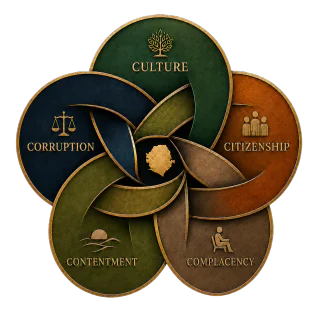
PART THREE · THE FIVE C THEORY
Citizenship
The complete introduction to Part Three, from the 2026 edition of The Five C Theory.
A country may possess citizens in law while producing supporters, clients, and subjects in practice. A person may hold a passport, vote, and remain legally equal while daily experience teaches that access depends upon connection, criticism carries risk, and public authority does not owe an explanation.
Citizenship is more than nationality. It is a reciprocal relationship among the person, the state, and the wider political community. The state owes citizens the protection of their rights, equal treatment, security, and institutions that can be questioned. Citizens owe lawful conduct, participation, care for common resources, and judgment larger than private or partisan interest.
The supporter begins with allegiance. The client begins with access. The subject begins with obedience. The citizen asks whether the rule was fair, the decision explained, and the same standard applied to allies and opponents. These postures can exist within the same person and shift with circumstance.
Part Three treats citizenship as the principal counterforce within the Five C Theory. It widens belonging beyond family, party, ethnicity, and region; turns respect into mutual recognition; and requires public officials to distinguish personal relationships from public duties. It also requires civic imagination: the disciplined ability to picture fairer institutions and identify the procedures, records, protections, and participation needed to build them.