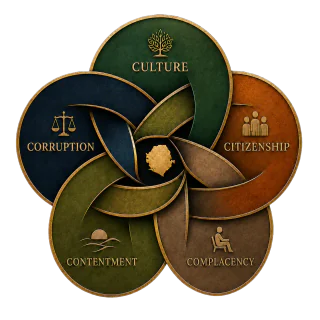
Breaking the Cycle
The Five Cs reinforce one another – but the cycle can be interrupted.
The framework is not a final judgment on Sierra Leone. It is a map of where citizens, leaders, institutions, families, professionals, and communities can begin the work of national renewal.
From diagnosis to reconstruction
Change begins wherever one force stops protecting another.
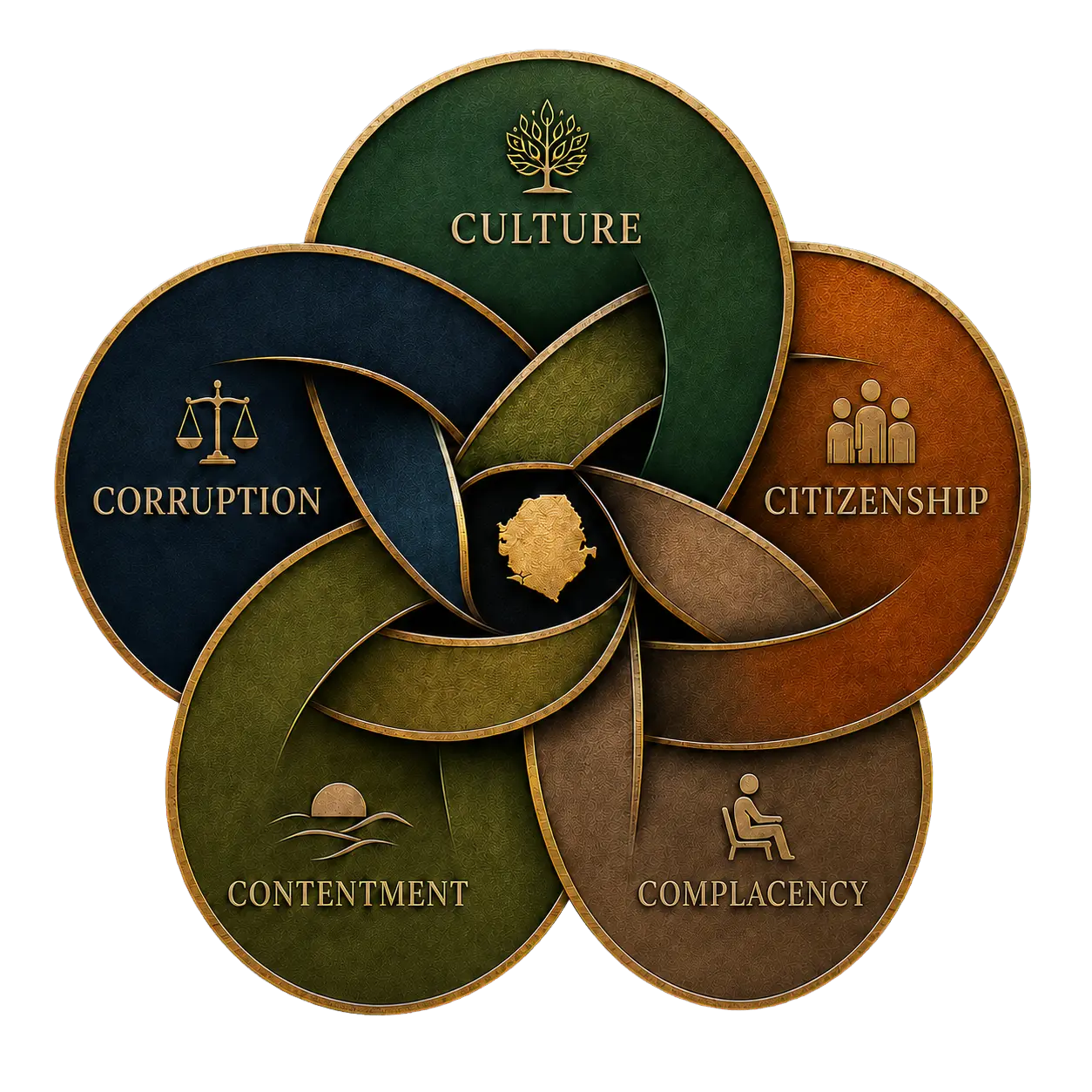
Culture can supply the moral language that excuses corruption. Corruption can weaken citizenship by making private access more useful than equal rights. Contentment can make institutional failure easier to endure, while complacency persuades people that resistance is pointless. Because the forces are connected, an interruption at one point can weaken the entire cycle.
Culture
Culture can become public solidarity when belonging is widened beyond private loyalty and directed toward the common good.
Corruption
Corruption can be challenged when transparent procedures, independent oversight, and credible consequences make public rules more valuable than private access.
Citizenship
Citizenship can become active and equal membership when people apply the same standards to allies and opponents and treat public institutions as something they collectively own.
Contentment
Contentment can restrain greed and protect dignity without lowering the expectations citizens place upon public institutions.
Complacency
Complacency can be replaced by disciplined public action when evidence, organization, institutional response, and credible civic hope show that persistence can produce an answer.
The work of renewal
The cycle is interrupted through repeated public choices.
A family stops pressuring an official for an unfair favor. A supporter applies the same standard to an ally. A public office publishes its requirements. A community preserves a promise and returns after the deadline. A professional association protects a member who refuses an improper instruction. No single action transforms the state alone, but each weakens the belief that private access matters more than public procedure.