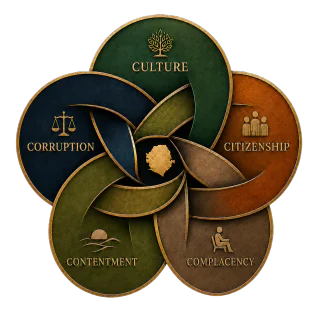
The Five Cs · 05
Complacency
The normalisation of an inadequate public standard, sometimes through the surrender of the expectation that power should answer.
Part Five: Complacency
Has the public standard been abandoned, or is action presently unsafe or unlikely to succeed?
Complacency concerns the public standard people come to accept, not how visibly busy or politically active they appear. A person may work hard, follow public affairs, and criticise leaders while treating an inadequate institution as beyond any continuing obligation to improve.
Three conditions must remain distinct. A citizen may no longer believe power should answer. A second may believe it should answer but doubt that a particular campaign will succeed. A third may wish to act but face danger, exhaustion, or responsibilities that make participation impossible. The second and third conditions are not, by themselves, complacency.
The greater duty remains with those who possess the power to improve the institution, protect participation, and answer a legitimate claim. Citizens should not have to demonstrate unlimited endurance to prove that the claim remains valid.
Illustrative example
Examine the relationship.
Residents may still need to use a damaged road and may lack a safe, effective route to campaign for repair. That does not make the road adequate. The concern is whether institutions and public judgment still preserve an obligation to decide, explain, and correct.
Reflection questions
Use the idea in conversation.
- 1
What unacceptable condition has been renamed normal?
- 2
What public question should your community refuse to let disappear?
- 3
What evidence would distinguish surrendered expectations from justified caution?
Read the full argument