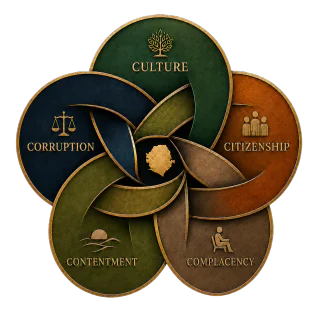
The Five Cs · 01
Culture
The relationships of belonging, respect, family obligation, and loyalty that can strengthen public care or allow private claims to displace public duty.
Part One: Culture
How can belonging protect the legitimate claim of the stranger?
Culture is not corruption. Belonging, respect, generosity, family obligation, and loyalty are human goods. The difficulty begins when private virtue determines public outcomes. Helping a relative can deny a stranger a fair opportunity. Respect can preserve dignity or prevent a necessary question. Loyalty can sustain a person through difficulty or shield wrongdoing from consequence.
Public office asks something emotionally difficult of its holder: recognition of the legitimate claim of the stranger. Authority belongs to a public trust, not to the network that helped the official rise. Part One examines belonging as a route to access, deference as a barrier to questions, the cost of refusing family pressure, and the protection of wrongdoing in the name of loyalty.
Illustrative example
Examine the relationship.
An official can remember the family that supported her education while refusing to determine a relative’s recruitment result. Disclosure, genuine recusal, and independent assessment protect the relative as well as the unknown applicant.
Reflection questions
Use the idea in conversation.
- 1
When does loyalty become complicity?
- 2
Which cultural strengths can support accountable public life?
- 3
What should a public official owe equally to every citizen?
Read the full argument