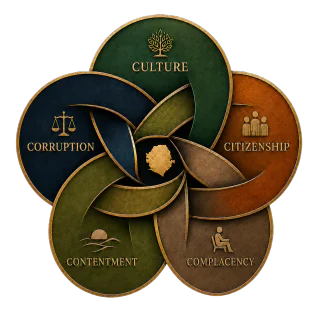
The Five Cs · 03
Citizenship
Equal public membership expressed through rights, shared duties, independent judgment, and institutions that must explain their decisions.
Part Three: Citizenship
Can a person obtain a fair process without loyalty to a patron?
Citizenship is more than nationality. It is a reciprocal relationship among the person, the state, and the wider political community. The state owes citizens the protection of their rights, equal treatment, security, and institutions that can be questioned. Citizens owe lawful conduct, participation, care for common resources, and judgment larger than private or partisan interest.
The supporter begins with allegiance. The client begins with access. The subject begins with obedience. The citizen asks whether the rule was fair, the decision explained, and the same standard applied to allies and opponents. These postures can exist within the same person and shift with circumstance.
Illustrative example
Examine the relationship.
Residents can keep buying water while collectively recording interruptions, identifying the responsible agency, and asking for a reasoned response. People unable to attend meetings remain entitled to the service; participation does not create their rights.
Reflection questions
Use the idea in conversation.
- 1
What responsibilities do citizens carry between elections?
- 2
Where does support for a party end and duty to the republic begin?
- 3
How can private frustration become organized public accountability?
Read the full argument